

Gone are the days of the “feedback sandwich”.
The feedback sandwich, also known as the “praise-criticism-praise” approach, involves delivering constructive criticism or negative feedback sandwiched between two positive or complimentary statements. While this approach was once popular, it is no longer recommended in recognition of the way it dilutes feedback, reduces trust in managers and causes confusion for employees.
The ability to provide effective feedback is extremely important in leadership roles. Effective feedback can significantly contribute to the growth and development of individuals, teams, and organizations. It helps individuals understand their strengths and areas for improvement and plays a vital role in developing new skills and refining existing ones.
Balancing constructive feedback with genuine positive reinforcement and recognition is also important for building relationships and maintaining motivation and engagement.
What is the problem with existing feedback practices?
There are numerous problems with the way feedback is currently manged in organizations. The feedback sandwich is still a commonly used strategy, unfortunately, but there are other problems that need to be addressed. These include:
1. Vague or general feedback which leaves employees unsure about what specifically needs improvement or what they are doing well.
2. The practice of only highlighting areas for improvement without acknowledging strengths or positive contributions- this is such a barrier to relationship building and trust.
3. Selective feedback whereby leaders don’t take time or efforts to provide comprehensive feedback. They don’t plan their conversations and they don’t consider the person’s future goals and development needs.
4. Lack of two-way communication where managers often fail to create an environment where employees feel comfortable providing their own feedback or sharing their perspectives. When employees don’t feel heard or valued, it hinders open communication, engagement, and collaboration.
5. Emotional Intelligence and Delivery: Some managers struggle with the emotional intelligence required to deliver feedback effectively. They may inadvertently come across as insensitive, dismissive, or confrontational, which can damage relationships and hinder the feedback’s effectiveness. Managers need to be mindful of their tone, body language, and approach to ensure that feedback is delivered in a respectful and supportive manner.
6. Lack of Follow-up and Support: Managers may provide feedback but fail to follow up on progress or provide the necessary support to help employees implement the feedback. Without ongoing guidance and support, employees may struggle to make the desired improvements or may not fully understand how to address the feedback.
7. Inadequate Training and Development: Many managers have not received proper training or development in delivering feedback effectively. They may not be aware of best practices, strategies for delivering constructive feedback, or how to navigate difficult conversations. This lack of knowledge and skill can hinder their ability to provide meaningful and impactful feedback.
Addressing these problems requires managers to prioritize effective feedback delivery by improving their communication skills, receiving training, and establishing a feedback culture within the organization. Encouraging ongoing feedback, both positive and constructive, and fostering a supportive and open environment can contribute to better feedback practices.
Why do managers struggle with feedback?
There are numerous reasons why managers struggle to take a holistic approach to feedback. Some leaders avoid giving feedback because they fear it may lead to conflicts or strain relationships. They may worry about how the recipient will react or how it will affect the dynamics within the team.
Leaders who lack strong communication skills, including active listening, empathy, and the ability to deliver messages clearly may struggle to effectively articulate their feedback.
Some managers don’t make the time and others have not received adequate training or guidance on how to provide feedback effectively.
To overcome these challenges and others, leaders can benefit from training and development programs that focus on communication and feedback skills. They can also seek mentorship or coaching to enhance their ability to deliver feedback effectively.
Why is it so important to take a holistic approach to feedback?
Constructive feedback helps individuals understand their strengths and areas for improvement. By providing specific and actionable feedback, leaders can guide their team members towards enhanced performance, increased productivity, and improved results. It also plays a vital role in developing new skills and refining existing ones. Leaders who offer feedback help their team members identify areas where they can expand their expertise and provide guidance on how to acquire new knowledge or capabilities.
Feedback that recognizes and acknowledges achievements or progress can boost motivation and engagement. It demonstrates that the leader values their team members’ contributions and helps create a positive and supportive work environment. Leaders who provide feedback encourage open dialogue and create an atmosphere where team members feel comfortable sharing ideas, concerns, and suggestions. This promotes teamwork, innovation, and a sense of shared ownership.
Leaders who prioritize feedback foster a culture of continuous learning and improvement within their organization. They encourage their team members to embrace feedback as an opportunity for growth and create an environment that values ongoing development and adaptability.
And finally, but perhaps most importantly, feedback conversations are an opportunity to strengthen relationships. Regular feedback sessions help leaders build stronger relationships with their team members. By engaging in meaningful conversations and actively listening to their concerns and perspectives, leaders can establish trust, rapport, and mutual respect. When leaders invest time and effort in guiding and supporting their team members, it can increase job satisfaction, loyalty, and retention rates.
How can managers make feedback conversations more holistic and effective?
Feedback conversations require time, space and privacy. One of the best ways to make feedback conversations more holistic and effective is to incorporate feedback conversations into regular coaching conversations. A coaching conversation is simply dialogue between a manager or leader and an employee where the managers goal is to support the employee’s growth, development, and performance improvement. They are check-ins as opposed to check-ups! And they should happen in a formal setting every week or every couple of weeks at minimum. Informally, they can even happen daily!
It so important for managers to create a safe and supportive environment where they can emphasize that feedback is a valuable tool for improvement and encourage open dialogue. Feedback should always be a two-way street… something that is still not largely understood in organizations. Employee should always have opportunities to share their thoughts and insights, fostering a collaborative approach to the conversation. This is part of the reason why a formal approach to coaching can be effective…because formal one-on-one’s provide greater opportunity for the manager to initiate these comprehensive, deep and meaningful conversations.
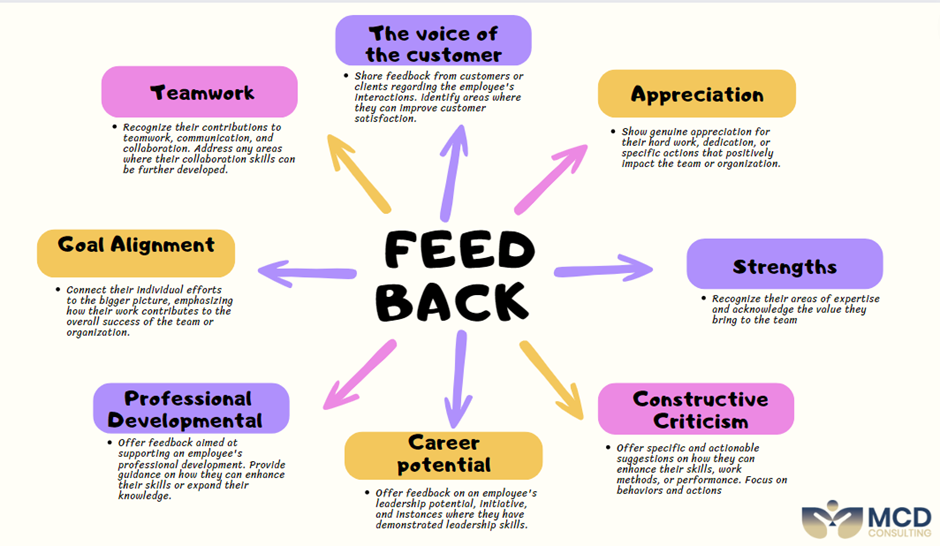
Feedback conversations are opportunities to discuss so much so much more than performance. I recommend that managers touch on ALL of these topics:
⭐ Appreciation
⭐ Strengths
⭐ Constructive Criticism
⭐ Career Potential
⭐ Professional Development
⭐ Goal Alignment
⭐ Teamwork
⭐ The Voice of the Customer
One last but very important point…It is always a good idea to frame feedback as an opportunity for learning and growth rather than as criticism. Avoid personal attacks or generalizations. Instead, emphasize the observable actions or outcomes that need attention and discuss the potential consequences.
Leaders often think that giving feedback requires them to do all the talking but feedback should always involve powerful questioning and active listening. Adopting a coaching mindset can help managers to get used to asking probing questions about the employees’ performance and behaviour, which encourages self-reflection, problem-solving, and ownership of the feedback. This approach helps employees identify their own development needs and generate solutions.